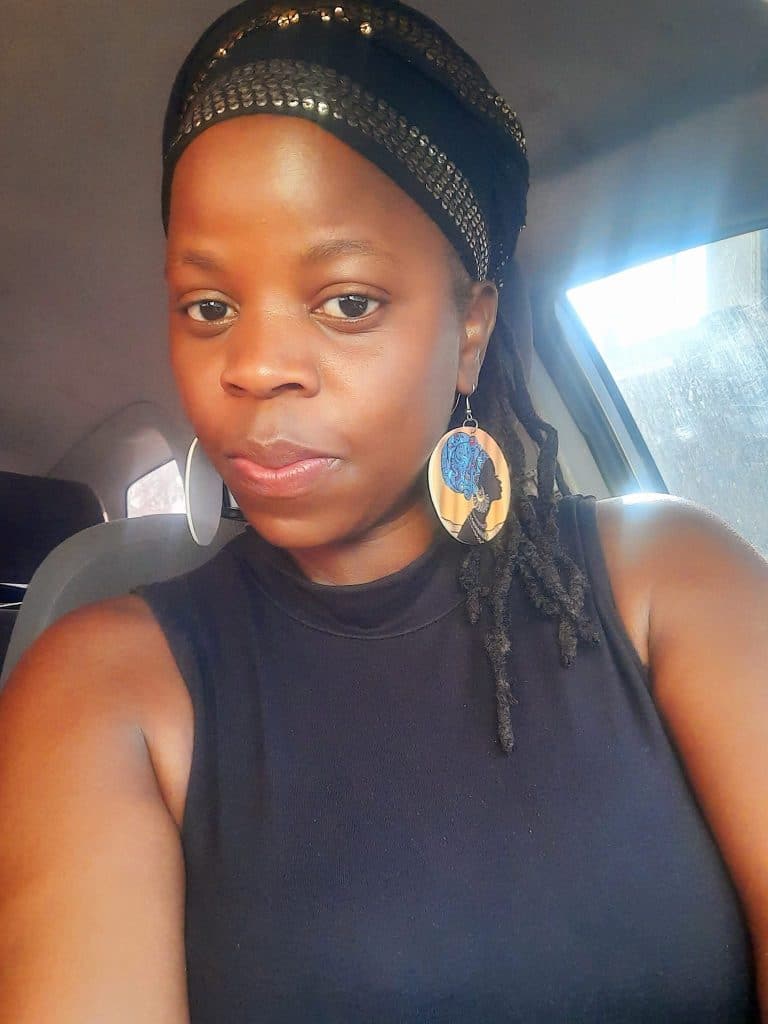
Mary Mzubwa Ndaro is a Tanzanian feminist, women’s rights advocate, social scientist and education leader. For more than 19 years, she has worked across civil society, international organisations and grassroots movements, engaging with issues such as gender equality, social justice, women’s economic justice, land rights, policy and advocacy, movement building, and the right to education.
But for Mary, feminism has never been only about the work she does. It is also about how she sees the world.
Her feminism has been shaped by listening to women’s stories, by her own experiences, by questioning what society tells us is “normal”, and by recognising that many of the experiences women and girls face as personal struggles are connected to broader questions of power, opportunity and inequality.
She is particularly interested in the spaces where the personal and the political intersect: the choices women can make about their bodies, relationships, livelihoods, motherhood, education and futures; who gets to make decisions; whose voices are heard; and who is expected to remain silent.
This curiosity and willingness to engage in difficult conversations led Mary, together with Demere Kitunga, Vicensia Shule, and Eluka Kibona, to co-create Vavagaa, a feminist storytelling and dialogue platform.
Vavagaa created space for conversations that are often uncomfortable or silenced, including discussions about bodily autonomy, reproductive health, parenting, marriage, menopause, ageing, sexual abuse, and the realities of being a woman. It was also a space for questioning feminism itself. Mary believes that we do not strengthen feminism by speaking only to those who already agree with us. Sometimes we have to sit with disagreement, listen, question ourselves and others, and have difficult conversations that help us understand why certain beliefs and systems persist.
That spirit of questioning has stayed with her.
For Mary, feminism is not about women merely occupying more positions within unequal systems. It is about asking deeper questions: Who has power? Who does not? Who is heard? Who gets to make choices? And what needs to change so that people can live with dignity and determine the direction of their own lives?
These questions have followed her into the education sector.
Today, as Executive Director of HakiElimu, Mary leads efforts to advance quality, inclusive and equitable education in Tanzania. For her, moving into education was not a move away from feminism. If anything, it has made the connection even clearer.
She sees education as one of the places where inequality can either be reproduced or transformed.
A girl may be sitting in a classroom, but is she learning? Does she feel safe? Is she encouraged to speak and to be curious? What happens when she becomes pregnant? What happens when her family cannot afford to keep all their children in school? What messages is she receiving about what a girl can become?
And what is the boy sitting next to her learning about masculinity, power and equality, and about how he should relate to women and girls?
What about a child with a disability? What is the education system and society around them telling them about who they are, what they are capable of becoming, and what they cannot be? How do these messages define and redefine them as people? And what will those experiences mean when they become adults?
These are education questions. But they are also feminist questions.
Mary believes education should give children and young people more than certificates. It should equip them to think, question, be curious, understand themselves and the world around them, and recognise that they have a voice. Education should expand choices rather than reproduce limitations.
It should give children and young people the skills not only to survive but also to thrive. It should prepare them to navigate this complex and challenging world while still imagining its possibilities.
For young women in particular, education should enable economic independence and equip them with the tools to understand the environment in which that independence is possible. Having an income does not automatically remove unequal power relations or guarantee that a woman has agency over the decisions that shape her life. Education should help young women understand the world around them, recognise their own power and possibilities, make informed choices, define for themselves the lives they want to live, and, importantly, learn to be kind to themselves, to others, and to the universe they are part of.
Her feminism is therefore rooted in both conviction and curiosity. She believes strongly in equality, equity, and justice, but also in listening to and understanding people’s journeys, and in empathy, kindness, and self-reflection. She believes in asking uncomfortable questions and making room for different generations, perspectives and experiences.
She also recognises that none of us has all the answers, and that our story is not everyone’s story.
Who we become, the opportunities available to us, and how we experience the world are shaped by many factors: where we come from, our economic circumstances and class, our geographical location, sex, religion, disability, and the identities to which society assigns meaning and value. Sometimes our experiences are shaped simply by existing in this world as women, as men, or as people with disabilities. Recognising these differences matters because equality cannot mean assuming everyone starts from the same place or experiences inequality in the same way.
That understanding also shapes how Mary thinks about leadership.
Leadership, for her, is not simply about being the person at the front of the room. It is about creating space for others to contribute, particularly people whose voices are too easily overlooked. It is about listening, being willing to learn and unlearn, challenging systems while also examining ourselves, and recognising that lasting change is rarely the work of one person.
Looking across Mary’s journey, from women’s rights and economic justice to policy advocacy, feminist storytelling, movement building, and now education, the thread linking these spaces is clear.
It is a belief in people’s agency.
The agency to speak. To question. To learn. To be curious. To make choices. To challenge what has been presented as inevitable and normal. And to imagine something different.
For Mary, that is where feminism and education meet.
Both are ultimately about expanding what is possible in people’s lives, giving people the freedom to question, the courage to be curious, the knowledge to understand the world around them, and the agency to make choices about the lives they want to live. But perhaps most importantly, they are about allowing people to imagine differently: to imagine possibilities for themselves and others that may not have seemed possible, and to be kind to themselves, to others, and to the universe they are part of.